From fine petals and subtle flavours to precise work and sensitive conversations.
Fineness and sensitivity
Fineness and sensitivity
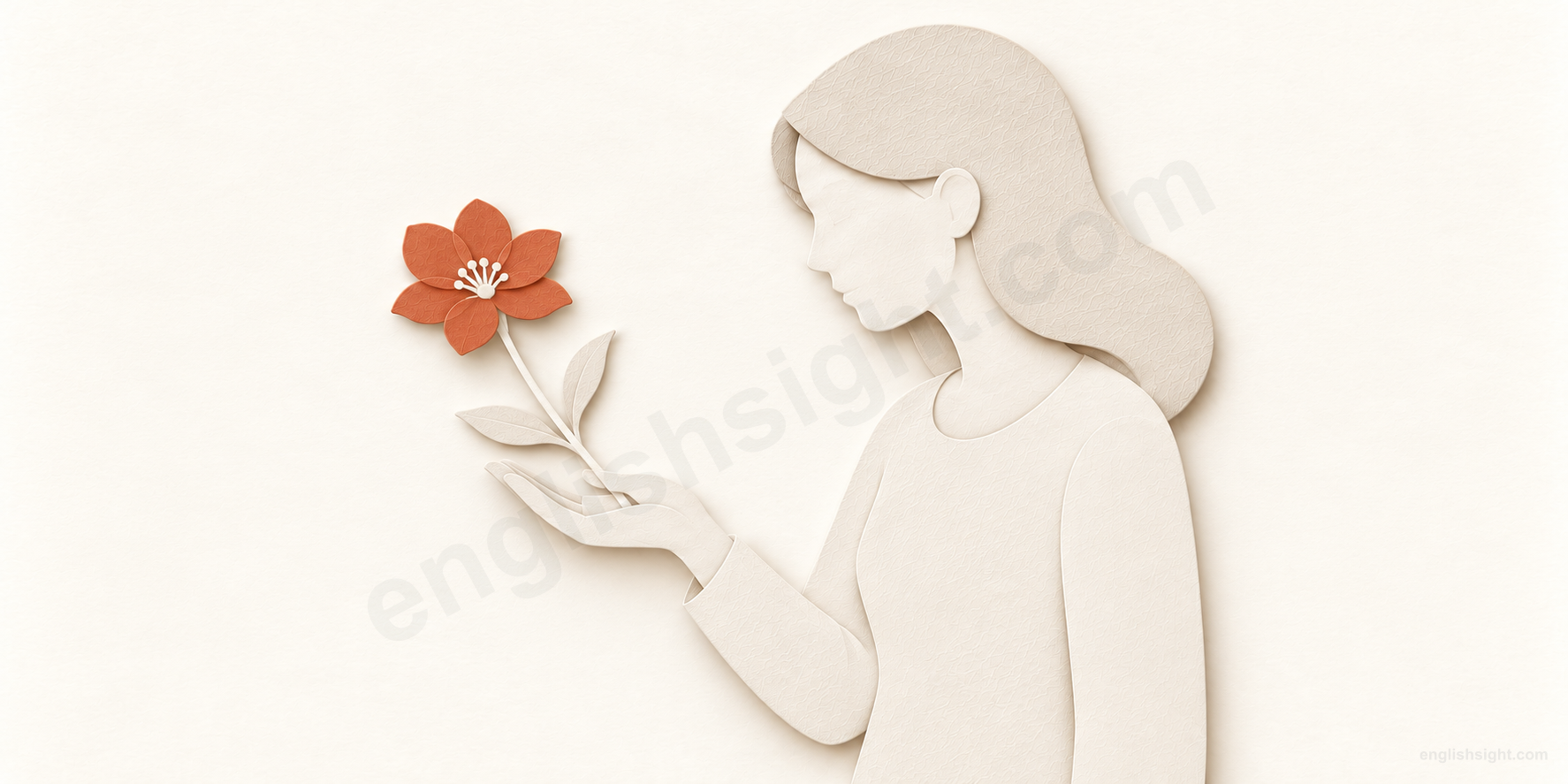
The flower has fine petals and a slender stem.
delicate
The petals and stem remain intact.
An open hand gently supports the lower stem without touching the petals.
Gentle support preserves the flower’s fine form.
Delicate draws attention to fine qualities or sensitivity, often making gentle, precise, or considerate treatment important.
The flower illustrates fine form and vulnerability. A delicate flavour is subtle rather than breakable; a delicate conversation needs tact rather than a literal gentle grip.
Delicate is an adjective with several related uses. It can describe something easily harmed, something finely formed or pleasantly subtle, and something needing or showing careful treatment. Read the noun and situation before choosing an interpretation.
A useful teaching connection is fineness or sensitivity: small differences and rough treatment can matter. This connection helps organize the uses, but it is not a rule that predicts every phrase or a shared mental picture of all English speakers.
01
What can easily be harmed?
An object, a person’s health, or a balance may be vulnerable. The possible harm changes with the noun; delicate does not always mean that something will physically break.
You choose treatment gentle enough for the material.
The noun identifies what needs protection.
Delicate fabrics, delicate glass, and delicate skin are vulnerable in different ways. Cloth may tear or lose its shape, glass may break, and skin may become irritated. The adjective describes susceptibility; it does not say that damage has already happened.
Use delicate before a noun or after be, feel, or look: The fabric is delicate; The glasses look delicate. In a delicate wash cycle, the adjective identifies a programme intended for such materials. Handle with care is a natural instruction, but care is supplied by the instruction, not by a hidden command inside the adjective.
In a sentence
Wash this scarf by hand because the fabric is delicate.
Watch the difference Delicate does not mean already broken. A damaged scarf and a delicate scarf describe different things.
02
delicate + health / constitution / stomach; person + be + delicate
delicate health / a delicate stomach
physically vulnerable or easily upset
Situation
Someone’s health is fragile, or certain foods easily upset their stomach.
What the description highlights
You describe a need for particular physical care.
Health vulnerability is different from graceful appearance.
A delicate child or delicate health describes someone who is not physically robust and may become ill easily. A delicate constitution means a body that is easily affected by illness or strain; constitution here is a rather formal word for physical make-up.
A delicate stomach is easily upset by food or other conditions. It need not mean that the person is generally unhealthy. Compare delicate hands: without further context, that usually describes fine, graceful hands, not illness. When talking directly to someone, a specific description of their health is often clearer than labelling the whole person delicate.
In a sentence
I have a delicate stomach, so I avoid very rich food.
Watch the difference Do not infer illness from delicate features, or a specific medical diagnosis from delicate health.
03
a delicate balance (between A and B / of forces)
a delicate balance
a balance that small changes can disturb
Situation
Two needs or forces are being kept in a workable relationship.
What the description highlights
A small change could upset that relationship.
What is vulnerable is a relationship between things.
A delicate balance can be ecological, political, personal, or practical. It is maintained under conditions in which a relatively small change may matter. The phrase does not require two equal physical weights.
Maintain, preserve, and upset a delicate balance describe what happens to that relationship. In a delicate balance between work and rest, between names the competing needs; delicate describes the balance’s sensitivity. This is the vulnerable branch of the word applied to a system rather than a breakable object.
In a sentence
Even one extra shift can upset the delicate balance between work and rest.
Watch the difference Delicate balance does not simply mean a difficult decision; there must be some balance or relationship at issue.
02
Fine form and gentle impressions
Delicate can praise fine detail, graceful shapes, or a light taste, smell, or colour. These are established uses, not claims that every delicate thing is weak.
04
delicate + features / hands / petals / blossom
delicate features
fine and gracefully shaped
Situation
You notice small, finely formed details in a face or a flower.
What the description highlights
You describe their graceful appearance.
Fineness can be attractive without implying poor health.
Delicate features, delicate hands, and delicate petals draw attention to fine shape and appearance. In this sense delicate often comes before the noun. It is a description of form, not a statement that the person or object is incapable of resisting any force.
A flower can be both finely formed and easily damaged, so two senses may be relevant at once. Context decides which is central. Small alone gives size; delicate adds an impression of fineness or grace. Not every small face or small object is naturally called delicate.
In a sentence
The drawing captures the flower’s delicate petals.
Watch the difference Delicate features describes appearance; it does not establish that someone has delicate health.
05
a delicate + mechanism / piece of work; delicately + past participle
a delicate mechanism
finely made with careful detail
Situation
A small device contains precisely formed and fitted parts.
What the description highlights
You notice the fineness of its construction.
Fine construction can also make careful handling important.
A delicate mechanism or delicate piece of embroidery has fine detail that calls for careful workmanship. With a clock mechanism, the word may also suggest that rough handling could disturb its tiny parts. The noun and context let the construction and vulnerability senses overlap.
Delicate describes the object; delicately describes how it is made or worked: a delicately carved frame. A complicated mechanism has many interacting parts, while a delicate mechanism highlights fine construction or sensitivity. Neither word automatically entails the other.
In a sentence
The repairer cleaned the watch’s delicate mechanism under a magnifying glass.
Watch the difference Delicate workmanship is not the same as poor workmanship: it may praise great skill.
A taste, smell, or colour makes a gentle impression.
What the description highlights
You describe a pleasing effect without much intensity.
Here delicate describes the quality of an impression, not breakability.
A delicate flavour or fragrance is pleasantly subtle. A delicate shade of pink is light and soft in effect. These established sensory meanings belong to the noun phrase: a fragrance cannot break in the way a glass can.
Delicate flavour often praises subtlety; weak flavour may suggest that there is disappointingly little taste, and bland suggests a lack of interesting flavour. Delicate does not mean delicious in general: a very strong flavour can be delicious without being delicate. The American spelling flavor has the same meaning as flavour.
In a sentence
The tea has a delicate floral flavour that disappears if you add too much milk.
Watch the difference A delicate taste can describe a subtle flavour; do not treat delicate as a general synonym for tasty.
03
Actions and conversations that need care
A task may require precision, while a topic may require tact. Delicate can describe either the need for careful treatment or the skilful treatment itself.
A task involves tiny adjustments or vulnerable parts.
What the description highlights
The person doing it must work accurately and carefully.
The task requires skill; it is not merely small.
A delicate operation may be surgery or another precise technical procedure. Repairing a tiny component can be a delicate task. The possible harm may be physical, but the adjective here puts attention on the care and precision required to do the work.
The operator can make delicate movements or delicate adjustments. Those phrases describe finely controlled actions rather than an action that itself breaks. Difficult is broader: carrying a heavy box upstairs may be difficult without requiring the precision suggested by delicate.
In a sentence
Replacing the tiny wire is a delicate task that requires a steady hand.
Watch the difference Delicate operation does not always mean surgery. Read what is being operated on or done.
08
a delicate touch; a delicate touch with + noun; verb + delicately
a delicate touch
a light or finely controlled way of acting
Situation
Too much pressure or force could spoil the result.
What the description highlights
Someone applies just enough force with control.
The adjective describes the manner or skill of the action.
A delicate touch can mean gentle physical contact or skilful control in an activity. A painter working on a fine detail needs a delicate touch; it is the control that matters, not merely how briefly the brush touches the surface.
You can also say Touch it delicately: the adverb modifies the action. A gentle touch stresses lack of force, whereas a delicate touch can also stress precision or refinement. With a social problem, the same phrase may suggest tact, but the surrounding situation must supply that interpretation.
In a sentence
She restored the tiny painted lines with a delicate touch.
Watch the difference Use the adverb for how an action is done: touch it delicately, not touch it delicate.
09
a delicate + subject / matter / issue / situation; this + be + delicate
a delicate subject / matter
a topic that needs tact to avoid offence or trouble
Situation
A conversation concerns something personal or likely to cause tension.
What the description highlights
You choose the time and words carefully.
The vulnerability belongs to people’s feelings or the situation.
Pay, family disagreements, and private health concerns can be delicate subjects. Delicate does not mean that a subject is forbidden; it signals a reason to approach it with sensitivity. This is delicate can describe the whole situation when the context makes the issue clear.
A delicate situation or delicate negotiations may involve competing interests as well as feelings. The risk is upsetting the relationship or progress. Sensitive is often a close alternative here. A controversial topic divides opinions; a delicate topic may simply be personal, even when nobody disagrees.
In a sentence
How to divide the family money is a delicate subject, so let’s discuss it privately.
Watch the difference Delicate does not mean secret or controversial in every context; the need for tact is central.
Someone must respond to a potentially upsetting problem.
What the description highlights
They respond without unnecessary offence or disruption.
Distinguish needing sensitive treatment from giving it.
A delicate situation needs tact; delicate handling shows tact. The adjective can describe the problem or the skilful response. A delicate refusal avoids unnecessary hurt while still saying no. It does not necessarily conceal the decision.
Handle the matter delicately uses an adverb for the considerate manner of acting. The connection with physical care is a useful teaching comparison, but there is no literal breakable object in a conversation. In more formal writing, delicate sensibilities refers to feelings or standards that are easily offended; it can sound critical or ironic in context.
In a sentence
Her delicate handling of the complaint helped both neighbours feel heard.
Watch the difference A delicate problem needs tact; delicate handling provides it. The adjective’s role changes with the noun.
Let the noun guide the meaning
Adjective patterns and forms
Use delicate before a noun or after a linking verb: delicate fabric; the fabric feels delicate. Compare with more delicate and most delicate. The ordinary adverb is delicately: move delicately; a delicately carved box. The final syllable of delicate is unstressed /kət/, not the verb ending in locate.
Choose the relevant contrast
Fragile stresses easy damage; fine can stress detail or quality; subtle stresses an effect that is not obvious or strong; sensitive often suits a person’s reactions or a social issue. Delicate overlaps with these words in particular contexts, rather than replacing them everywhere.
A connection, not a universal formula
Fine appearance does not prove illness, a delicate flavour is not a breakable object, and a delicate matter need not be secret. The nouns and context select the branch. These are adjective combinations, not phrasal verbs; passive and causative verb patterns are not needed for this headword.
Choose what delicate contributes
Use the situation and the noun to distinguish vulnerability, subtlety, precision, and tact.
1. A tea’s flavour is light and pleasantly subtle. What does delicate describe here?
2. The portrait shows her delicate features. What can you safely infer?
3. Which phrase describes a response that shows consideration, rather than a problem that requires it?
4. Why might repairing a tiny watch part be a delicate task?
5. An extra shift could upset a delicate balance between work and rest. What is vulnerable?
Sources and teaching notes
The dictionary entries below were read to check meanings and patterns. Explanations and examples are original; the connection shown by the diagram is a teaching model.
The diagram explains a useful connection, not a picture shared by every native speaker.