Follow silk from natural fibre to cloth, then notice when texture or context changes the meaning.
From fine fibre to fabric
Fibre, thread, fabric
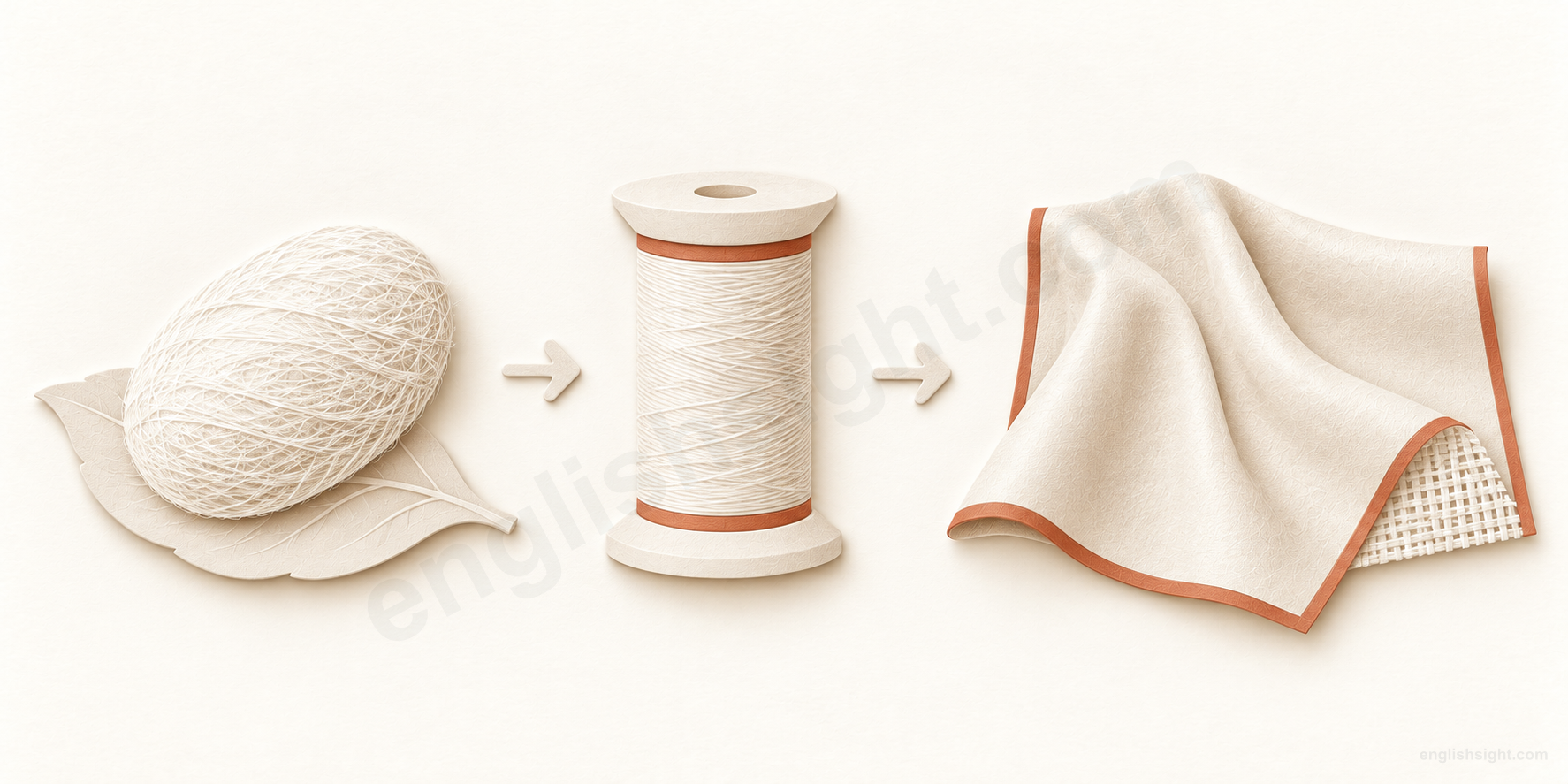
Fine silk fibre forms a silkworm’s cocoon.
silk
The thread and the fabric can both be called silk.
Silk fibre is made into thread, then woven into cloth.
From cocoon fibre to thread to cloth: silk names the material in these related forms.
Silk names a fine natural fibre, especially from silkworm cocoons, and the thread or fabric made from it.
The central picture follows the textile branch. Spider silk, corn silk, racing silks, and legal expressions require the source or context explained below.
Silk /sɪlk/ is mainly a noun. It can name a fine natural fibre, thread made from that fibre, or the fabric woven from it. A silk scarf names the material; as smooth as silk borrows a quality.
This lesson follows those connections and separates the established uses that need their own context. The diagram is a teaching model, not a claim about an identical picture in every English speaker’s mind.
01
From natural fibre to something you wear
Silk can name the fibre, the sewing thread, or the woven fabric. Sentence structure shows which form of the material matters.
01
produce / spin + silk; a strand of silk
produce / spin silk
the fine natural fibre made by silkworms
Starting context
A silkworm is making its cocoon.
What the expression says
Fine silk surrounds it.
Silk names the substance; spin describes producing the thread.
Silkworms produce silk when forming their cocoons. Here silk names the fibre before it becomes clothing. Produce is a general verb; spin focuses on making thread. Silk itself does not mean weave or sew.
For this material meaning, silk is normally uncountable: some silk, a strand of silk, or silk production. A strand is one length of fibre; it is not a new substance. The pronunciation is /sɪlk/, with one syllable.
In a sentence
The silkworm spins silk to form a cocoon.
Choose carefully Do not use a silk to mean one strand. Name the unit: a strand of silk.
02
silk + thread; sew with silk thread; embroider + object + in silk
silk thread / embroider in silk
thread made from silk fibre
Starting context
You choose a thread for embroidery.
What the expression says
The stitches are made with silk thread.
The same material name can refer to thread used in sewing.
Silk can mean thread made from the natural fibre, especially for sewing or embroidery. Silk thread makes the form explicit; embroider a pattern in silk names the material used for the stitches.
The verb describes what someone does with the thread. Weave silk concerns making fabric; sew with silk thread concerns joining or decorating material. Neither action is contained in the noun silk alone.
In a sentence
Nora embroidered the small flowers in silk.
Choose carefully In silk describes the embroidery material here; it does not mean Nora was wearing silk.
03
some / a piece of / two metres of + silk; a fine silk; fine silks
some silk / a piece of silk
cloth woven from silk thread
Starting context
You need cloth for a scarf.
What the expression says
You buy a measured length of silk.
Usually the material is uncountable; a unit word measures it.
In a fabric shop, silk usually means the cloth. Ask for some silk, a piece of silk, or two metres of silk. The number goes with the measure, not directly with the uncountable material.
Countable uses also exist. A fine silk can mean a particular kind of silk fabric, and fine silks can mean several kinds or pieces. This is a textile or descriptive use; for one finished item, a silk scarf is clearer than a silk.
In a sentence
We bought two metres of blue silk for a scarf.
Choose carefully Two silks does not normally mean two scarves. Count the finished objects or specify the fabric types.
04
silk + object noun; be made of + silk; pure silk; a silk blend
a silk scarf / made of silk
identify what an object is made from
Starting context
You check the scarf’s material label.
What the expression says
The label says it is pure silk.
Silk can name a material before a noun or after made of.
A silk scarf is a scarf made from silk. Silk comes before the head noun, which names the object. With several objects, say silk scarves: the plural ending belongs to scarves. A silk dress, silk curtains, and a silk lining follow the same pattern.
The scarf is made of silk expresses the material in a full clause. Pure silk identifies silk without another fibre mixed in; a silk blend contains silk mixed with another fibre. A shiny surface alone does not establish the fibre content. Check the label rather than guessing from the look.
In a sentence
This scarf is made of pure silk.
Choose carefully A silk scarf identifies its material. A silky scarf can merely feel like silk.
02
Texture and other fine strands
A comparison can borrow silk’s feel. Other uses name natural strands, with the source identified by spider or corn.
05
as soft / smooth as silk; silky + noun
as soft / smooth as silk
compare something’s texture with silk
Starting context
You feel a cat’s soft fur.
What the expression says
You compare its feel with silk.
The comparison borrows a quality without changing the material.
As soft as silk and as smooth as silk use silk as a standard of comparison. The subject could be fur, skin, or another surface. The sentence says how it feels, not what it is made from.
The related adjective silky can describe this quality: silky hair has a soft, smooth feel. Silky can also describe fluid movement. For everyday material identification, keep silk and silky distinct: silk fabric identifies the fibre, whereas a silky feel describes an impression.
In a sentence
The cat’s fur felt as soft as silk.
Choose carefully A comparison with silk does not claim that the fur contains silk.
06
spider silk; a thread of spider silk; the silk of a web
spider silk
the fine thread produced by a spider
Starting context
A spider releases a fine strand.
What the expression says
The strand forms part of its web.
Spider names the producer, not an ingredient in ordinary silk cloth.
In spider silk or the silk of a spider’s web, silk names the thread the spider produces. This is an established use for a similar natural filament. It does not imply that the spider’s thread came from a silkworm.
Spider silk is normally uncountable: a thread of spider silk counts one length. Context distinguishes it from the textile material. The central diagram follows the silkworm-to-fabric branch; it does not show every source of a substance called silk.
In a sentence
A fine thread of spider silk stretched between the leaves.
Choose carefully Spider silk and a silk scarf are different contexts for silk; do not infer the producer from silk alone.
07
corn silk; strands of corn silk
corn silk
the fine hairlike strands on an ear of corn
Starting context
You peel back the outer leaves of an ear of corn.
What the expression says
You remove the fine strands underneath.
This plant term uses resemblance to fine threads.
Corn silk names the fine strands on an ear of corn. Silk here is a conventional name for a plant part, not fabric stuck to the vegetable. It is useful in cooking and gardening contexts.
Use corn silk as a material-like noun: remove the corn silk, or remove the strands of corn silk. The related agricultural verb silk means that corn develops these strands; it is specialist vocabulary rather than an everyday verb meaning make silk cloth.
In a sentence
Remove the corn silk before cooking the corn.
Choose carefully Corn silk is part of the plant; it is not silk produced by an insect.
03
Clothing, titles, and established expressions
Some expressions depend on racing, law, history, or a proverb. Learn the whole expression and its setting.
08
wear / be dressed in + silk; silks + plural verb; racing silks
wear silk / racing silks
silk clothing, or a jockey’s distinctive racing outfit
Starting context
One person describes a party outfit; another describes a horse race.
What the expression says
The context decides whether silks means clothing or racing colours.
The material name can stand for clothing associated with it.
Wear silk and be dressed in silk describe wearing clothes made of the fabric. Silks can mean silk garments collectively. The shift is from material to the things made of it; a particular item can still be named directly, as a silk blouse.
In horse racing, a jockey’s silks are the distinctive coloured racing clothes identifying the owner or stable. Treat this as a sporting clothing term. It does not simply mean several pieces of fabric, and the term alone is not a guarantee about the modern garment’s fibre content.
In a sentence
The jockey wore the owner’s blue and white silks.
Choose carefully Silks in a race names the outfit; in a fabric shop it may mean kinds or pieces of silk cloth.
09
a silk; take / took / taken silk
a silk / take silk
a senior legal title, or receiving that title
Starting context
A barrister has an established legal career.
What the expression says
The barrister becomes King’s Counsel.
A traditional gown gives its material name to the rank and its holder.
In British legal usage, a silk is a lawyer who holds the rank of King’s Counsel, called Queen’s Counsel when the monarch is a queen. Here silk is countable: a silk, two silks. It is a specialist use, distinct from buying some silk.
Take silk means receive that rank. It does not mean pick up a piece of fabric, and it does not mean first become a lawyer. The expression is associated with the silk gown traditionally worn at this rank. Learn the complete expression in its legal context.
In a sentence
After many years as a barrister, she took silk.
Choose carefully A silk is a title-holder in this context, not a name for every lawyer or a guarantee of representing the government.
10
(you can’t) make a silk purse out of a sow’s ear
You can’t make a silk purse out of a sow’s ear.
poor starting material limits the quality of the result
Starting context
Someone offers weak material for an ambitious project.
What the expression says
A speaker doubts that it can become an excellent result.
The whole proverb contrasts a fine product with unsuitable material.
A sow is an adult female pig. The proverb contrasts a fine silk purse with a pig’s ear: it expresses the view that poor material cannot be turned into something excellent. The point comes from the whole established saying, not a special meaning of silk alone.
People can use it about a weak plan, script, or other starting material. It can sound dismissive, especially if applied to a person. It expresses a speaker’s judgment about limits; it is not a factual rule that improvement is impossible in every situation.
In a sentence
“Better lighting won’t fix this poor script—you can’t make a silk purse out of a sow’s ear.”
Choose carefully Recognize the proverb as a whole; do not interpret it as literal advice about sewing.
11
the Silk Road; the Silk Route
the Silk Road / the Silk Route
the name of a historical network of trade routes
Starting context
You read about trade between Asia and Europe.
What the expression says
The text names the Silk Road.
Silk is part of a proper name linked to the goods traded.
The Silk Road, also called the Silk Route, names a historical network of trade routes connecting Asia and Europe. Silk carried from China was important to its name. It was a network rather than a single modern road.
Use the and capitals in this historical name: the Silk Road. The material noun remains lowercase in ordinary phrases such as a silk scarf. The proper name does not create a general pattern in which silk means road or journey.
In a sentence
The museum has a display about trade along the Silk Road.
Choose carefully The Silk Road is a historical name; a road made of silk would mean something entirely different.
Keep material, texture, and context separate
Silk and satin answer different questions
Silk identifies a fibre; satin identifies a fabric made with a particular weave and a smooth, shiny face. Silk satin is possible, but satin alone does not establish that the fibre is silk. A shiny surface is not enough to identify a material.
Count the object or the kind
For the material, use some silk or a length of silk. Countable a silk and silks can refer to fabric types or pieces, clothing, or a legal title-holder. Context matters; these uses do not make every material phrase countable.
Grammar labels can differ
Silk before another noun is often described as a noun used as a modifier; some dictionaries label this use adjectival. For the learner, the practical pattern is silk scarf / silk scarves. The ordinary lesson is about nouns and expressions, so passive, causative, and particle-verb patterns are not applicable.
Boundaries
The corn-growing verb silk is noted in the corn unit. Technical fibre processing, botanical filaments beyond corn, parachute slang such as hit the silk, and separate words such as silkworm and silk-screen are outside the expanded lesson. The selected uses are not a frequency ranking.
Choose the intended meaning
Use the object, grammar, and situation to decide what silk means.
1. You want to say that a scarf is actually made from silk fibre. Which phrase makes that claim?
2. In a fabric shop, you need a measured length for a project. Which request is clearest?
3. A biography says that an experienced barrister took silk. What happened?
4. The cat’s fur is as soft as silk. What does the sentence establish?
5. A jockey wears the owner’s silks. What are silks here?
Sources and teaching notes
Definitions and usage were checked against the sources below. Explanations, example sentences, and the diagram were written for this lesson; the visual connection is a teaching interpretation.
The material sequence is a teaching aid, not a shared mental picture claimed for every native speaker.